 University of North Texas

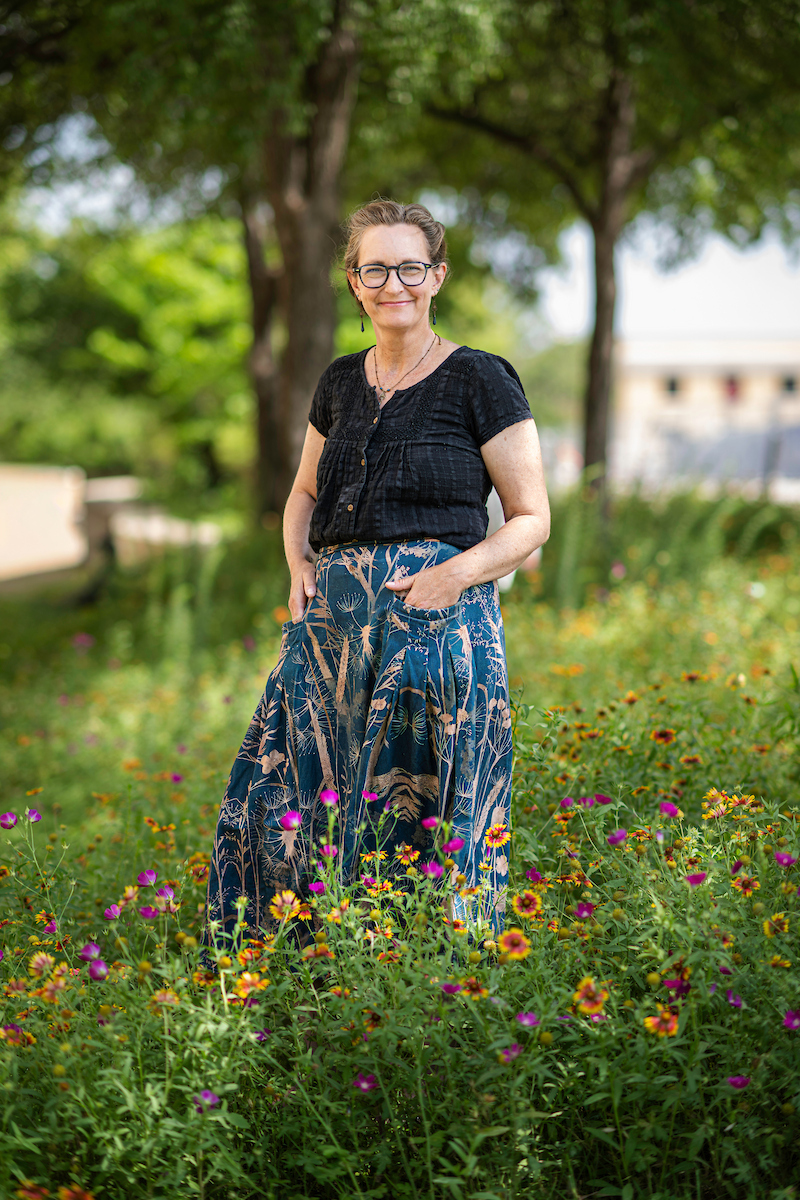
With a lifelong passion for wanting to preserve Dallas-Fort Worth’s natural ecoregions, Clinical Associate Professor Dr. Jaime Baxter-Slye is being recognized on the state level for her collaborative work with students and local governments.
With a lifelong passion for wanting to preserve Dallas-Fort Worth’s natural ecoregions, Clinical Associate Professor Dr. Jaime Baxter-Slye is being recognized on the state level for her collaborative work with students and local governments.
 “It completely took me by surprise,” Dr. Baxter-Slye said. “It’s so rewarding to watch
your students learn and grow, and to get an award yourself really validates all the
work you’re doing.”
“It completely took me by surprise,” Dr. Baxter-Slye said. “It’s so rewarding to watch
your students learn and grow, and to get an award yourself really validates all the
work you’re doing.”
Dr. Baxter-Slye has earned the Texas Recreation & Park Society’s Educator Outstanding Performance Award for 2026. The award recognizes educators who contributed new knowledge to the field and actively shared the information with parks and recreation practitioners, plus their exceptional teaching and education.
“Dr. Baxter-Slye’s highly productive research program focuses on community science partnerships to enhance ecological restoration,” said Amie Lund, director of the Advanced Environmental Research Institute at UNT. “Many of her student-based restoration projects are conducted in direct collaboration with local municipalities’ parks and recreation departments connecting UNT students with both the public and policymakers.”
In North Texas, Dr. Baxter-Slye and her students have worked with the cities of Denton, Corinth, Grand Prairie and Lewisville and with Dallas County. Much of the work involves habitat management or restoration. In Lewisville, Dr. Baxter-Slye is involved with multiple projects thanks in part to her work at Lewisville Lake Environmental Learning Area.
“I’ve worked with LLELA ever since I started at UNT in 2014,” Dr. Baxter-Slye said. “I’ve led classes down there, built the ecology field training program for sophomores there, and then the connection to the city’s Parks and Recreation department was a very organic thing that happened.”
That connection led to one of her largest projects to date — enhancing 70 acres of land along Garden Ridge Boulevard.
“We were able to seed it with native and locally sourced Texas prairie plants, and the city has outstanding staff in their department who were open to the project. When we got some complaints from the community, there were others who really backed us up, which was great,” Dr. Baxter-Slye said. “Once flowers started blooming, the mayor and I went on tour and gave talks about the project and even presented at a state conference together.”
Their work went on to earn one local award, two state-wide society awards and the Gold Medal Award from the American Academy for Park and Recreation Administration. After the initial work, she then tasked students in her Ecological Action Studio class with a follow-up project.
“The course is geared towards helping our ecology majors fly before leaving the nest. They did an entire assessment of how the project was going. Then they created social media content, signage and educational outreach materials for Lewisville. After that, they presented their entire project to city council. They get to see what it’s like to be a consulting firm.”
Her students have also volunteered and performed assessment reports at LLELA and work with researchers at the Lewisville Aquatic Ecosystem Research Facility which studies aquatic plants.
“Through her leadership, Dr. Baxter-Slye has created unique applied learning opportunities for her students while simultaneously helping our city address pressing environmental challenges,” said Chris Chastin, preserve and greenbelt manager with the Lewisville Parks and Recreation Department.

For Dr. Baxter-Slye, her driving motivation is to save as many Texas native plants, animals and fungi as she can while giving her students real world experience in the field.
“When I first meet our ecology majors, they are green. They entered ecology wanting to do something for the planet, but some barely know how to hold binoculars,” Dr. Baxter-Slye said. “Through our organizations like the Society for Ecological Restoration, Bee Campus, Bird Campus, Mean Green Tree Team and more, they’re completely different people by the end of their senior year. It’s exciting to see the vast range of knowledge they gain.”
Via UNT News