 University of North Texas

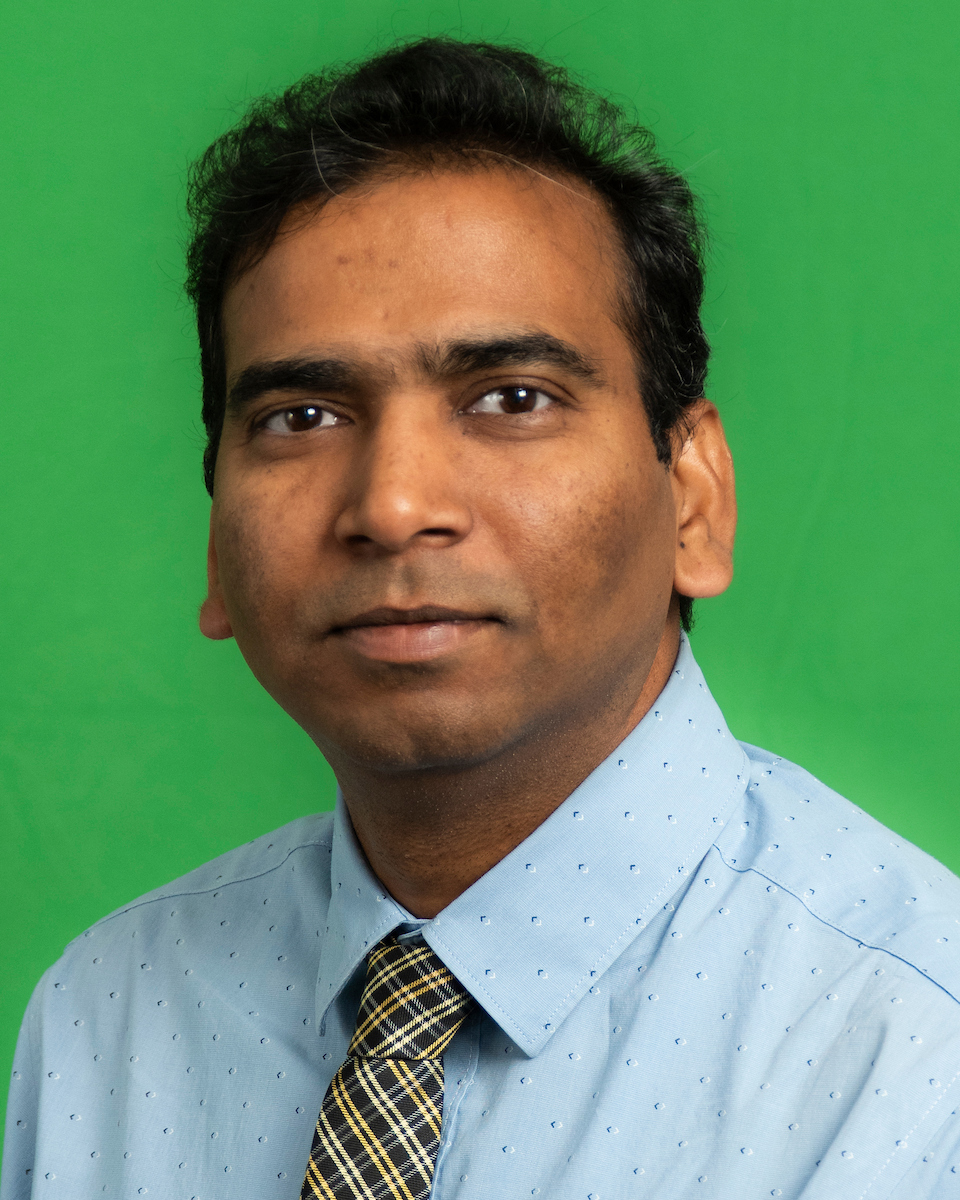
The UNT College of Science is pleased to welcome Dr. Satya K. Kushwaha to the physics department as one of their newest Assistant Professors.
The UNT College of Science is pleased to welcome Dr. Satya K. Kushwaha to the physics
department as one of their newest Assistant Professors. Dr. Kushwaha brings a wealth
of expertise in high-quality crystal growth, leading to discoveries including the
realization of a true topological insulator, and is looking forward to helping UNT
advance our extreme microelectronics research.
 “Single crystals are the thermodynamically most stable form of materials, and they
uniquely reveal intrinsic electronic, magnetic, and optical behaviors. Progress in
producing high purity crystals has historically driven many of the technological advances
that define modern microelectronics and quantum information science. My work focuses
on the design and development of single-crystal materials and study their fundamental
physics,” said Dr. Kushwaha, who received his Ph.D. from the University of Delhi and
the National Physical Laboratory in India. “I investigate their electrical, optical,
magnetic, and thermodynamic properties, as well as the evolution of correlated phases
and cooperative phenomena that emerge in extreme environments – such as low temperatures,
ultra-high magnetic fields, ultrafast lasers, and high-energy ion-matter interaction.”
“Single crystals are the thermodynamically most stable form of materials, and they
uniquely reveal intrinsic electronic, magnetic, and optical behaviors. Progress in
producing high purity crystals has historically driven many of the technological advances
that define modern microelectronics and quantum information science. My work focuses
on the design and development of single-crystal materials and study their fundamental
physics,” said Dr. Kushwaha, who received his Ph.D. from the University of Delhi and
the National Physical Laboratory in India. “I investigate their electrical, optical,
magnetic, and thermodynamic properties, as well as the evolution of correlated phases
and cooperative phenomena that emerge in extreme environments – such as low temperatures,
ultra-high magnetic fields, ultrafast lasers, and high-energy ion-matter interaction.”Dr. Kushwaha is in the process of establishing the Crystal Growth Laboratory for Ultrawide
Band Gap (UWBG) and Quantum Materials at UNT, which will support high temperature
synthesis and single crystal growth, as well as investigations of defect controlled
structure–property relationships. His research is currently conducted through collaborations
with colleagues and partner laboratories while the new facilities are being developed.
“I was drawn to UNT because of the thriving condensed-matter and materials physics
community here and the opportunity to build a crystal-growth program that complements
both physics and engineering,” said Dr. Kushwaha. “The collaborative environment,
commitment to research excellence, and university’s momentum towards quantum and extreme
microelectronics made it an ideal place to pursue this interdisciplinary phase of
my work.”
Dr. Kushwaha is also looking forward to teach courses in Modern Physics and Solid-State
Physics, where his students will begin connecting fundamental principles to real materials,
devices, and emerging technologies.
“I am excited to mentor students and help build UNT’s visibility in extreme microelectronics
and quantum materials research,” said Dr. Kushwaha. “My advice for the students is
to stay curious and not be afraid to ask questions that go beyond what’s in the textbook.
Real discovery begins when you push past the obvious and explore ideas that challenge
your assumptions.”