 University of North Texas

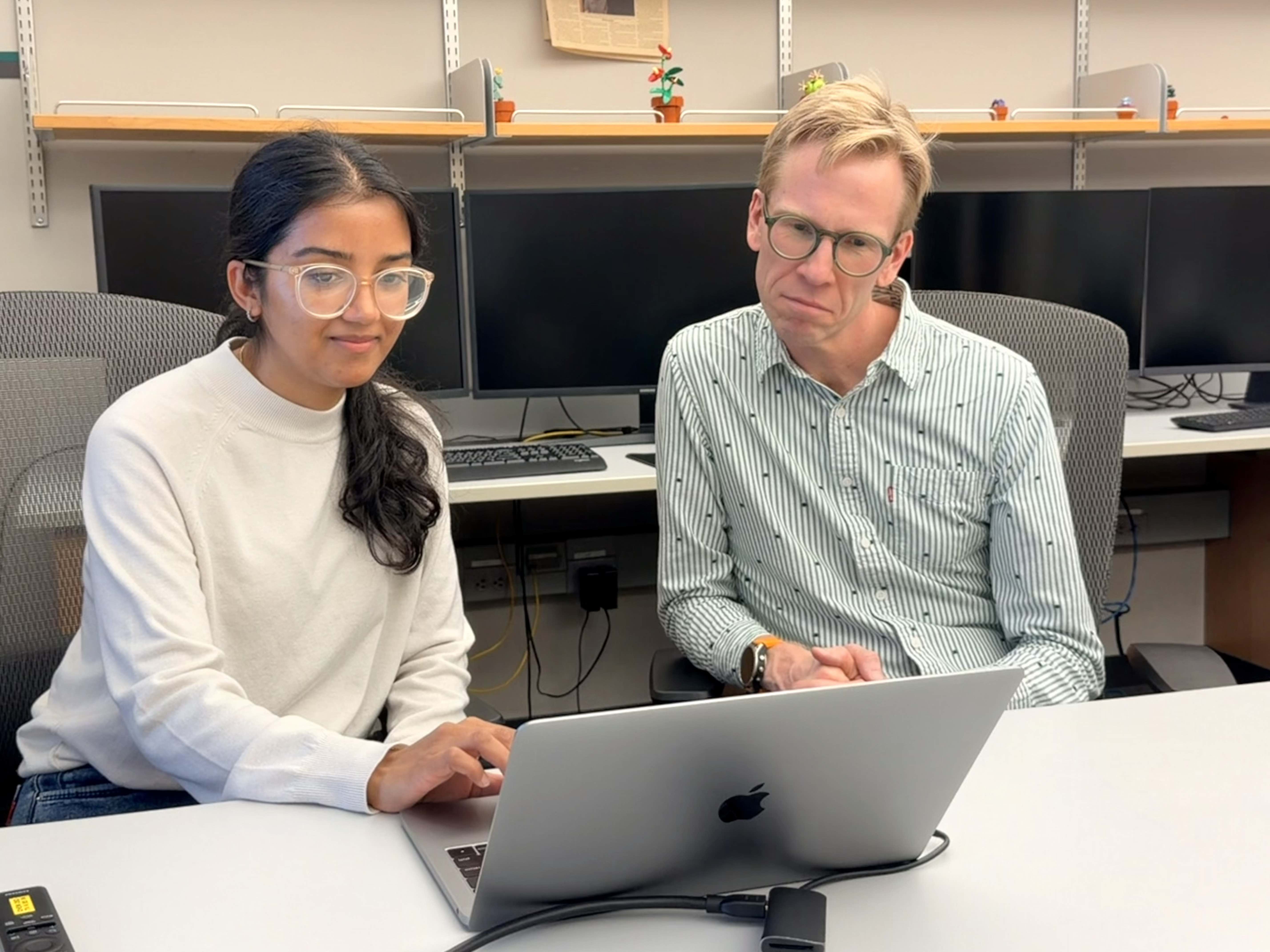
Shikshya Bhusal is a UNT graduate student currently in her fifth year of conducting research in Dr. Omar Valsson's lab. This year she recieved the Promise in COMP Award organized by the ACS Division of Computers in Chemistry.
Shikshya Bhusal is a UNT graduate student currently in her fifth year of conducting
research in Dr. Omar Valsson's lab. Though she came to UNT with a background in biochemistry, her
curiosity was sparked by the idea of integrating computational science into her work.
 “I was really interested in how computer science and computation are becoming such
an important part of every field, but when I started, I barely knew anything about
Linux, programming, or data analysis,” said Shikshya, who completed her B.S. in biochemistry
at the University of Nebraska. “Dr. Valsson was incredibly patient and provided all
the resources I needed to build a strong foundation in computational research.”
“I was really interested in how computer science and computation are becoming such
an important part of every field, but when I started, I barely knew anything about
Linux, programming, or data analysis,” said Shikshya, who completed her B.S. in biochemistry
at the University of Nebraska. “Dr. Valsson was incredibly patient and provided all
the resources I needed to build a strong foundation in computational research.”
The first time Shikshya reached out to Dr. Valsson about joining his research group
was in 2021 while he was still living and working in Germany. Now, in Dr. Valsson’s lab, she studies Proteolysis-Targeting
Chimeras (PROTACs), a novel therapeutic approach designed to degrade disease-causing
proteins in the body.
“It’s a very exciting and competitive area of research, and many pharmaceutical companies
are working on developing PROTACs for diseases like cancer and neurodegenerative disorders,”
said Shikshya. “My work focuses on studying how PROTACs behave in different solvents
using computational methods.”
As a testament to her success in this field, this year Shikshya received the Promise in COMP Award organized by the ACS Division of Computers in Chemistry. The award includes registration
to the ACS Spring 2026 Spring National Meeting, an invitation to present in the “Women
Make COMP” symposium, and a mentorship lunch with leading computational researchers.
"Receiving this award was such a proud and emotional moment for me. Coming from a
country where many women don’t get the chance to continue school, being recognized
as a Woman in COMP means so much,” said Shikshya, who grew up in Nepal. “It feels
like I am representing not just myself, but also all the girls back home who dream
of opportunities like this.”
During her time at UNT, Shikshya has been the recipient of the Toulouse Graduate Summer
Travel Award twice, as well as the chemistry department’s Dr. Linda Truitt Creagh
Travel Award. Her work placed in the top three presentations at the Texas Computational
Chemistry Symposium (2025) and the Physical and Computational Chemistry ACS-DFW Miniature
Meeting (2024), and she recently presented at UNT’s annual research day event. When she’s not
busy with her own work, she also spends time mentoring undergraduates in the lab.
“When I was an undergrad, I really wanted to get involved in research and wished I
had someone who could guide me,” she said. “So now, I try to be that person for students
who are eager to learn and grow in science. Helping them get started and watching
them gain confidence makes me genuinely happy and it’s one of the best parts of my
experience here.”
Shikshya was a participant of ANSWER-Nepal, a program that sponsored her education
from early schooling through high school, laying the foundation for her academic journey
and making it possible to pursue higher education. She said she is also grateful for
the unwavering support of her parents and mentors at UNT, who have offered a wealth
of encouragement on the way to where she is now.
“My parents have supported me completely, even when it meant I would move halfway
across the world to follow my dreams,” said Shikshya, who looks forward to presenting
at the ACS meeting and finishing her Ph.D. next year. “Here at UNT, Dr. Valsson has
been more than just a mentor; he has been my biggest academic supporter and guardian.
He has helped me build a strong foundation in computational chemistry and has encouraged
me to communicate with experts and learn from them, which has helped me grow both
technically and professionally.”
Shikshya and Dr. Valsson’s most recently published paper on PROTACs can be found in the Physical Chemistry Chemical Physics (PCCP) Journal here.